Resources

Everything the division publishes, in one place: the enrollment forms, straight answers to the questions families ask, and the basics every new cadet learns. Search it.

48 answers, 2 forms

Straight answers

Questions families ask

How old does my child need to be? Ages 10 through high school

Navy League Cadets covers ages 10 to 13. Sea Cadets covers 13 through high school. Thirteen falls in both, so tell us your child's age and we will say which fits.

How do we join? Three steps
  1. Send the national enrollment request with The Sullivans Division, Buffalo NY selected. The Join page shows you how.
  2. Visit a drill. Parents are welcome, and we encourage you to talk to our recruiting instructor and watch the day. Wear normal clothes and sneakers that do not mark floors, and tell us before you come so we are ready for you.
  3. Hand in the completed packet, the copies it asks for, and the dues. Your cadet's first drill as a cadet follows.
What are the requirements to join? School, consent, good character

A cadet must be unmarried, enrolled in school and in good academic standing, a U.S. citizen or permanent legal resident, of good moral character, and have a parent or guardian's consent. Above all, a cadet has to want to be there and be ready to come to drill regularly.

Are there dues? $25 a year

Yes. Unit dues are $25 a year, the same for Sea Cadets and League Cadets, paid on the Store. Membership includes the Sea Cadet group accident and health plan. National charges its own fees on top: national program fees (opens in a new tab).

What does the first year cost? About $175 for a Sea Cadet

$25 in dues plus the $150 sea bag for a Sea Cadet; a League Cadet's sea bag is $75, so about $100. Meals at drill are $5 for a day and $20 for a weekend. Recruit training is priced by national, about $300, travel not included. If cost is the thing in the way, say so when you contact us.

Do we buy our own uniform? Mostly issued

Mostly no. The Navy passes surplus uniforms to the program, and the division issues them through the sea bag, paid once. They are used uniforms and not every size is in stock. As a cadet grows, uniforms can usually be exchanged at no extra cost. Parents handle alterations, and the uniforms come back to the division if a cadet leaves.

A few items are not issued and you may need to buy them: a white hat, black socks, a second pair of shoes, and extra name tapes. Anything else comes from a Navy Exchange uniform shop.

Will my child have to join the armed forces? No

No. Cadets carry no commitment to military service, now or later. A cadet who does choose to enlist in the Navy or Coast Guard may be able to enter at a higher pay grade because of their Sea Cadet training.

What is the Naval Sea Cadet Corps? A national youth program

A national youth program supported by the U.S. Navy and the U.S. Coast Guard. Cadets learn seamanship and seagoing skills, and patriotism, courage and self-reliance along the way. They train aboard Navy and Coast Guard ships and at shore stations, and wear Navy uniforms marked with Sea Cadet insignia.

The Navy League Cadet Corps takes ages 10 to 13; the Naval Sea Cadet Corps takes 13 through high school. Units run in almost every state, Puerto Rico and Guam, and the program is open to every young American regardless of race, color, religion or sex. More about the division.

Is there a medical exam? Yes, like a sports physical

Yes. A doctor completes the medical examination in the Cadet Application, much like a high school sports physical.

Nobody is turned away because of a disability. Where a medical condition rules out part of the program, a parent or guardian can file a Request for Accommodation (NSCADM 015) so the cadet takes part as fully as possible.

Will Sea Cadets get in the way of school? Rarely

Rarely. The division drills one weekend a month during the school year, and training away from home runs during school breaks.

What will my child learn? Seamanship to leadership

Naval history, customs and traditions, seamanship, navigation, first aid, drill, and how to lead a team. Some of it makes a better citizen; some of it gives a head start to anyone who later chooses a sea service. See what cadets train in.

Is there a summer camp? Yes, recruit training first

Yes. Every new cadet completes recruit training, about two weeks at a Navy or Coast Guard training site during a school break. After that, cadets can apply for advanced training each summer and winter. National prices each course, about $300, travel not included.

Do cadets go to sea? Yes, after recruit training

Yes. After recruit training and the required courses, cadets can compete for two weeks aboard Navy vessels, from small craft up to aircraft carriers. Aboard ship they train in seamanship, damage control, firefighting and standing watch.

Who teaches the cadets? Volunteers and senior cadets

Adult volunteers, many of them active, reserve or retired Navy personnel, and senior cadets who have earned leadership positions. Every officer and instructor in this division is listed on Leadership.

What is the point of the training? Leaders of character

The program is organized along military lines, but the aim is the young person, not recruitment. Cadets build respect, self-esteem and responsibility. The national mission is to build leaders of character through honor, respect, commitment and service, the four words on our seal, and the program stands for a life free of alcohol, drugs and gangs.

Where did the Sea Cadets come from? Founded in 1962

The Navy League of the United States established the Sea Cadets in 1962, at the request of the Department of the Navy. The purpose has held since: interest young people in seamanship, build citizenship and strong moral principles, and show them public service and the careers of the sea services through hands-on training with them.

Who sponsors the Sea Cadets? The Navy League, and local supporters

Nationally, most units are sponsored by local councils of the Navy League of the United States, a non-profit of citizens who support the sea services and care about young Americans. The Sullivans Division is also carried by local businesses and families: see our sponsors.

What are name tapes and the Sea Cadet flash? Sewn on every uniform

Name tapes carry the cadet's name. The flash is the patch that marks a cadet as part of the Sea Cadet Corps; it sits one inch below the shoulder seam, centered on each sleeve. The division tells new families where to order tapes and shows cadets where each one goes.

Where are the unit costs itemised? Unit costs, itemised

Dues, sea bag, meals and ID cards, with the figure for each, are on the Store.

What does national charge? National program fees

National charges on top of unit costs: enrollment, recruit training and later trainings. The current figures are on national program fees (opens in a new tab).

Are there advanced courses? Yes, nationwide

Yes. Beyond ships, the national catalogue has included aviation, music, Seabee, special operations, submarine orientation and leadership courses. Courses are competed for, and what is offered changes year to year. The About page lists the range.

Is there travel, or an exchange program? Both, earned on merit

Cadets travel to training sites across the country. Outstanding cadets can also be chosen for the international exchange program, which has included exchanges with sea cadets in Canada. Selection is on merit: a strong record in the program and a good reputation at home and in the community.

How do promotions work? On merit

Promotion is earned. Cadets advance by completing the qualifications for each rate, and those who show promise are given leadership positions in the unit. A recruit reaches E-2 and E-3 by finishing the personal qualifications for each. The Petty Officer Leadership Academy can be taken any time after E-3 and must be finished before Petty Officer Second Class.

Training manuals come from the recruit training officer in charge, the Training Officer, or national's training site. Answers go in on the official answer sheets only.

Does it help toward college or a service academy? It can
Can my cadet keep a summer job? Yes

Yes. Cadets choose which training period to attend, so training can fit around a summer job.

What are the Navy core values? Honor, Courage, Commitment

The Navy began on October 13, 1775, when the Continental Congress authorized a few small ships. Its core values have carried through since.

Honor. Behave ethically with everyone, tell the truth, take responsibility for what you do, and keep your word.

Courage. The moral and mental strength to do what is right, even when it is hard or unpopular, and to meet a demanding task without regard to personal consequences.

Commitment. Respect up and down the chain of command, care for the people around you, treat every person with dignity, and keep improving yourself and your team.

What is the Sea Cadet oath?

I promise to serve faithfully, honor our flag, abide by Naval Sea Cadet Corps Regulations, carry out the orders of the officers appointed over me, and so conduct myself as to be a credit to myself, my unit, the U.S. Naval Sea Cadet Corps, the Navy, the Coast Guard, and my country. So help me God.

As printed in the national Cadet Application.

What is the Sailor's Creed?

I am a United States Sailor. I will support and defend the Constitution of the United States of America and I will obey the orders of those appointed over me. I represent the fighting spirit of the Navy and those who have gone before me to defend freedom and democracy around the world. I proudly serve my country's Navy combat team with Honor, Courage and Commitment. I am committed to excellence and the fair treatment of all.

What is the Recruit Creed?

I am a recruit in the United States Naval Sea Cadet Corps. I will obey the orders of those appointed over me. I will learn the corps inside and out. I am dedicated to my shipmates and those above me. Everything I learn I will take with me. My mission is to learn how to apply the Core Values of Honor, Courage and Commitment to my everyday life.

How do I stand at attention?

Asked by a superior to state it, a cadet answers word for word while taking the position:

Sir (or Ma'am), the position of attention is: head erect, eyes in the boat, chin in, shoulders back, chest out, stomach in, weight evenly distributed on both feet, with heels together, feet forming a 45 degree angle, arms hanging naturally at sides, palms facing inwards, thumbs along trouser seams, with fingers joined in a natural curl. Sir (or Ma'am).

What is the quarterdeck? Five rules

The quarterdeck is the area of a ship or training site, usually the entrance, set aside for ceremony. Its rules:

  1. Never be loud or sloppy near the quarterdeck.
  2. Never appear on it unless in the uniform of the day.
  3. Never eat or drink on it.
  4. Never cross or walk on it unless you must.
  5. Never lounge on it or near it.
What is the chain of command?

A series of positions in which each has direct authority over the one below. In the division, from the top:

  1. Commanding Officer
  2. Executive Officer
  3. Operations Officer
  4. Training Officer
  5. Advanced Training Company Officer in Charge
  6. Recruit Training Company Officer in Charge
  7. Admin, Fiscal, Supply, and Awards and Ribbons Officers
  8. Chief Petty Officer
  9. Lead Petty Officer

Inside the Recruit Training Company: Company Commander, Assistant Company Commander, then the squad leaders and assistant squad leaders of Alpha and Bravo squads. Who holds each post is on Leadership.

How and when do cadets salute? How and when

The naval salute is given palm down, toward the shoulder, a custom from sailing ships, when hands were dirty with tar and an officer would not show a dirty palm.

How.

  • Raise the right hand directly; the tip of the forefinger touches the lower edge of the headgear, above and right of the eye.
  • Thumb and fingers straight and together; you should see the whole palm looking straight ahead.
  • Upper arm parallel to the deck, forearm at 45 degrees.
  • Out of ranks, turn head and eyes toward the person or colors being saluted.

When.

  • At attention or when marching; juniors always salute first, and smartly.
  • Officers, and colors or standards being paraded: at six to eight paces, or at the nearest point.
  • The colors, or the music for colors, when in sight or hearing.
  • Outdoors when covered; indoors only when standing watch.
How do I stand watch at recruit training?

A ship always has sailors on watch, in port or at sea. At recruit training each company stands watch from lights out to reveille, two cadets at a time, in shifts of two hours.

  • Wake your relief fifteen minutes before the watch changes; report five minutes early for instructions.
  • A roving sentry walks the company area every fifteen to twenty minutes and logs it.
  • The log: capitals only, black pen only, 24-hour time with no colon, zeros slashed, mistakes struck through once and initialed.
  • Challenge anyone trying to enter the area. The general orders are posted at every station; study them between rounds.
  • Any question or problem, find the petty officer of the watch or the officer of the deck. If it is urgent, the nearest staff member. Safety comes first.
What is expected for attendance? At least 80 percent of drills

Attendance counts in every unit's annual inspection, so cadets must attend at least 80 percent of regular drills. A cadet who has to miss one calls their squad leader first; if the squad leader cannot be reached, the next person up the chain of command. Missing too many drills, or missing without calling, can lead to probation or removal from the unit.

What are the grooming standards?

Cadets in uniform are clean, well groomed, and pressed, with every patch and name tape secure and in place. Hair, nails, jewelry and makeup follow the national uniform regulations; the division teaches the current standard to every new cadet, and parents help most by reminding them of it before drill.

How do I place an order? Cart, then checkout

Choose an item on the Store, pick a size or a drill if it asks, and add it to the cart. The cart shows the full total before you pay, and no sales tax is added. Type the cadet's name and pay with PayPal. Unit essentials are handed over at drill; printed merchandise is made to order and shipped to you.

How can I pay, and is it safe? With PayPal, Venmo or card

With PayPal, Venmo, PayPal Pay Later or a debit or credit card, all in PayPal's own secure windows. Card details go to PayPal and never touch this site, and the whole site runs over an encrypted (https) connection.

Do I need an account to order? No

No account on this site. Add what you need to the cart and pay with PayPal, Venmo or a debit or credit card.

I did not get an order confirmation. Check spam, then write to us

PayPal emails the confirmation. If it has not arrived, check your spam folder, then write to info@thesullivansusnscc.com with the name on the order.

Can I cancel or change an order? Write to us quickly

Write to info@thesullivansusnscc.com as soon as you can. Whether an order can still change depends on whether it has been handed over or, for printed merchandise, sent to print.

Where is division merchandise? Division merchandise

Hoodies, tees, caps and more on the Store, paid for in one secure checkout.

Where is everything about joining on one page? How to join

What the program is, what it costs, and the enrollment steps, on the Join page.

Where are eligibility and the training catalogue? Eligibility and training

Age bands, requirements and the national training catalogue are on About.

What does national tell parents? For parents, from national

The program explained by the organisation that runs it: for parents, from national (opens in a new tab).

Where is the national Sea Cadet website? seacadets.org

Training catalogue, policy, scholarships and news for the whole program on seacadets.org (opens in a new tab).

Who runs the division? Officers and instructors

Every officer and instructor, their role, and what to write to them about, on Leadership.

Who do I ask about anything else? info@thesullivansusnscc.com

The division, about the program, the site, the store or an order: info@thesullivansusnscc.com, or the form on the Contact page. A person answers, usually within a week.

The enrollment packet

Enrollment forms

Start with the national enrollment request on the Join page. When the division follows up, this is the packet it uses. It is here so you can read it before you fill it in.

Hand in with the packet

  • A copy of your child's health insurance card.
  • A copy of your child's immunization record.
  • The first year's dues, $25, paid on the Store.

The division can only complete an enrollment when the whole packet comes in together. These are the national forms (Cadet Application NSCADM 001, revised August 2017). National revises its forms from time to time, so check with the division that you have the current version before you sign.

Cannot find it?

The division answers questions directly, usually within a week. That is faster than waiting for a page that does not exist yet.

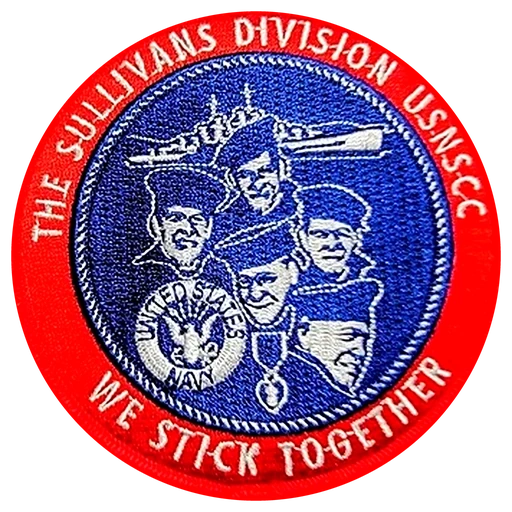
The Sullivans Division patch: We stick together
Join the Division